
Comparing Per-Kilometer Driving Costs of Petrol and Electric Cars in Pakistan
Comparing Per-Kilometer Driving Costs of Petrol and Electric Cars in Pakistan
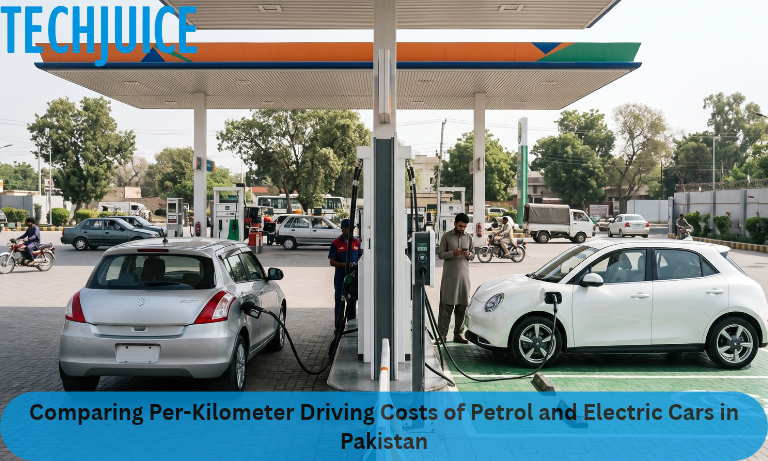
The biggest factor when comparing petrol vs electric cars in Pakistan is where you charge. At petrol prices effective 24 November 2026, a Suzuki Swift GLX CVT costs about PKR 20.58 per kilometre in fuel. An MG Binguo Pro costs about PKR 6.75 per kilometre at home or PKR 14.21 at a public charger billing PKR 100 per unit.
The Binguo costs PKR 932,810 more to buy. At 15,000 km a year, the Swift has the lower three-year ownership cost in this comparison. Over five years, the Binguo comes out about PKR 84,000 ahead if you do 80% of your charging at home and both cars fetch the same resale price. Rely entirely on public charging at the modelled rate, and the Swift comes out about PKR 363,000 ahead. Both results are before buyer-specific costs such as registration, insurance and charger installation.
Petrol vs electric car running costs in Pakistan
The Oil and Gas Regulatory Authority set the ex-depot petrol price at PKR 319 per litre effective 24 November 2026. PakWheels lists the Swift GLX CVT at 15.5 km/L in mixed driving. If the rate changes, use the latest petrol prices in Pakistan and divide the price per litre by your actual fuel economy.
For the Binguo, the model assumes 13.5 kWh per 100 km at the battery in mainly urban driving. Charging losses bring the billed energy to about 15 kWh per 100 km at home and 14.21 kWh per 100 km on public DC. The model uses PKR 45 per added kWh at home and PKR 100 per kWh in public.
The calculation is straightforward. For petrol, divide the price per litre by kilometres per litre. For an EV, multiply the billed kWh per 100 km by the price per kWh and divide by 100. At an 80% home and 20% public charging mix, the Binguo would cost PKR 8.24/km, or about PKR 123,632 a year in electricity.
Your Electricity Bill and Your Route Can Change the Result
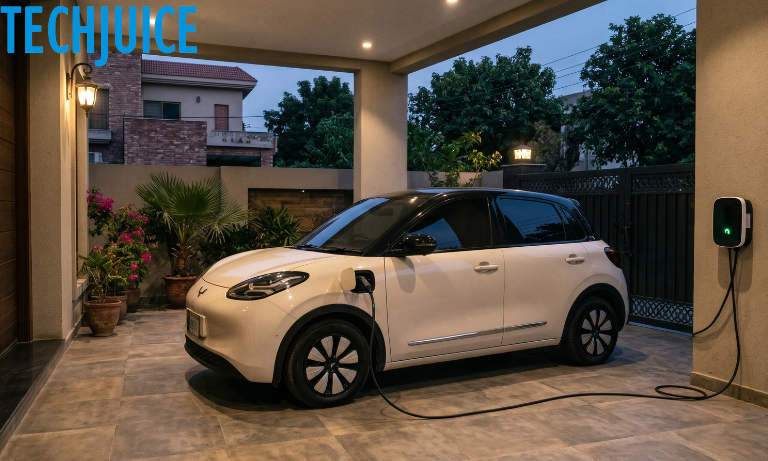
NEPRA’s February 2026 schedule lists base rates of PKR 33.10/kWh for the 201–300 unit unprotected residential slab and PKR 36.46/kWh for the 301–400 unit slab, before applicable charges and adjustments. At 15,000 km a year, charging the Binguo entirely at home adds about 188 units per month. That can push your household into a higher slab. For a better estimate, calculate your monthly bill with and without those extra units, then divide the difference by the units added.
Public prices vary by station. November listings showed examples from PKR 80 to PKR 120/kWh in Lahore, with one northbound Bhera stop on the M-2 listed at PKR 150/kWh. Motorway driving also changes energy use. In one PakWheels owner review, the Binguo used about 12 kWh/100 km in city traffic and reached 25–26 kWh/100 km at higher speeds. At the midpoint of that highway reading, the Binguo would cost about PKR 26.84/km on public DC at PKR 100/kWh. The Swift costs about PKR 18.76/km at 17 km/L on the highway.
Purchase prices and the cost of switching
At 15,000 km a year, the Binguo’s energy savings alone take about 4.5 years to recover its purchase-price premium over the Swift GLX if you charge entirely at home. That rises to about five years on the 80/20 mix and nearly ten years on public charging at PKR 100/kWh. Maintenance and resale can move those figures in either direction.
The price gap depends on the models you compare. The petrol MG ZS was listed at PKR 6.60 million, while the locally assembled electric Jaecoo J5 launched at PKR 6.00 million to PKR 6.70 million at introductory prices. TechJuice covered the two variants in its report on the Jaecoo J5 BEV launch prices. Compare written on-road prices for the trims you would actually buy, including freight, registration and withholding.
Where Hybrids Fit
A battery-electric vehicle, or BEV, runs entirely on electricity. A conventional hybrid, or HEV, uses petrol and recharges its small battery while driving, so it needs no plug. A plug-in hybrid, or PHEV, can cover short trips on electricity and use petrol for longer journeys. A range-extended EV, often called a REEV or EREV, typically uses a petrol engine to generate electricity when battery charge runs low. For a plug-in hybrid or range extender, how often you plug in largely determines how much petrol you save.
Maintenance, battery life and charging access
A petrol Swift needs engine oil, filters, spark plugs and scheduled CVT servicing. The Binguo skips those jobs but still needs tyres, brake checks, cabin filters and battery-system inspections. EVDost’s November 2026 estimate puts annual maintenance and wear at PKR 54,850 for a small petrol car and PKR 36,500 for a similarly sized EV at 15,000 km. These are budgeting estimates. Ask for an itemised service schedule from each dealer if you want a model-specific figure.
MG lists a five-year or 100,000 km vehicle warranty and an eight-year or 150,000 km battery warranty for the Binguo. A publicly verifiable Pakistani replacement-pack price was unavailable on the data date. If you’re buying used, ask for a battery health report and check whether the warranty transfers. Ride-hailing drivers should also confirm commercial-use terms and work out when they are likely to hit the mileage limit.
If you can charge at home, compare EV charging solutions in Pakistan based on what your car can accept and what your electrical supply can support. Ask an electrician to price the circuit and protection before buying a wallbox. If you live in an apartment or drive long distances regularly, check your actual charging options first. TechJuice has reported ultrafast charging on the M-2, but it’s worth confirming the connector, carriageway and operating status before leaving.
What EV Incentives Can Buyers Count On?
As of 24 November 2026, qualifying locally supplied electric cars and SUVs with batteries of 50 kWh or less benefited from 1% sales tax through 30 June 2027. Punjab also lists a 95% exemption on EV registration fees and a 99% exemption on motor vehicle tax. Imported cars can face different taxes and duties based on battery size, assessed value and tariff classification. Ask the dealer to itemise the charges for your exact model.
The government’s proposed 2026–31 auto policy outlined phased tariff cuts, charger incentives and EV financing of up to PKR 10 million. Use the terms on your dealer invoice and any confirmed bank offer when budgeting. The existing SBP cost-sharing scheme covers eligible electric bikes, rickshaws and loaders.
Three-year and five-year ownership costs
The comparison assumes a cash purchase, 15,000 km a year, and constant November energy and maintenance costs. It tests equal resale prices of PKR 4.25 million after three years and PKR 4 million after five. These are scenarios informed by used Swift asking prices. The Binguo has less local resale history, so the price it will fetch is harder to estimate.
Each subtotal adds the purchase price, energy and maintenance, then subtracts resale. To calculate your total, add registration, token tax, insurance, charger installation, any financing charges and uncovered repairs. For example, a PKR 150,000 charger installation costs more than the modelled PKR 84,330 five-year EV lead. Punjab’s EV registration and token tax exemptions can work in the other direction.
Resale can tip the decision. At year five, the Binguo needs to sell for about PKR 3.92 million to match the Swift on the 80/20 charging mix, assuming the Swift sells for PKR 4 million and before buyer-specific charges. On public charging alone, the Binguo needs about PKR 4.36 million to break even.
Which car makes more sense for you?
Frequently asked questions
How much does it cost to charge an electric car in Pakistan?
A 20% to 80% top-up on the Binguo’s nominal 31.9 kWh battery costs about PKR 957 at home or PKR 2,015 on public DC at the modelled rates and charging efficiencies.
Are electric cars cheaper to maintain?
Routine maintenance can cost less because a battery EV has no engine oil, spark plugs or engine air filter. It still needs tyres, brake checks and cooling-system maintenance. Get a model-specific quote for servicing and ask what the warranty covers.
Is a plug-in hybrid better than a fully electric car?
A plug-in hybrid can suit drivers who regularly charge for short trips and use petrol on longer journeys. A fully electric car is easier to budget for when you have dependable charging and know your usual route.
Conclusion
For this comparison, the Suzuki Swift is the stronger choice for a three-year owner or a driver who relies on public charging. The MG Binguo can be cheaper over five years if most charging happens at home and its resale value holds up. To make the decision for your own household, compare the on-road prices, calculate what the extra units will cost on your electricity bill, and check how much you would need to get back when you sell.