
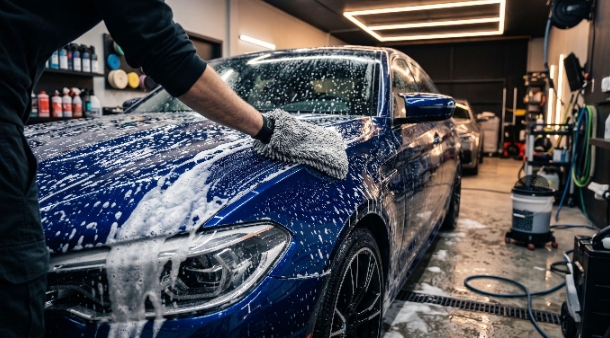
A comprehensive technical guide to protecting your vehicle’s clear coat from abrasive scratching, premature oxidation, and improper cleaning routines.
Every car owner appreciates the mirror-like reflection of a brand-new vehicle rolling out of a showroom. That deep, glossy finish is the result of precision-engineered automotive paint systems designed to withstand atmospheric stress. Yet, within just six to twelve months of daily driving in Pakistan, many vehicles lose their showroom luster—replaced by hazy circular spiderwebs known as swirl marks, dull patches, and faded paint.
The primary culprit behind this degradation is almost never harsh driving—it is improper washing techniques. A vehicle’s modern clear coat is astonishingly thin, often measuring between 35 and 50 microns (thinner than a standard post-it note). When subjected to abrasive sponges, aggressive household detergents, or improper drying methods, this delicate resin layer is scratched and stripped of its UV inhibitors.
Below is an in-depth breakdown of the 7 most common and costly car washing mistakes, the underlying physics and chemistry behind clear coat damage, and how to wash your vehicle properly at home.
Mistake 1: Using Household Dish Soap, Laundry Detergent, or Floor Cleaners
One of the most widespread vehicle care mistakes in Pakistan is reaching for kitchen dishwashing liquid, laundry powder, or household floor cleaners to wash a car.
The Damage
Dish soaps and laundry detergents are formulated with aggressive degreasing agents and high alkalinity (pH 8.5–10+) designed to break down stubborn animal fats and cooking oils. When applied to automotive paint:
- Wax & Sealant Stripping: They immediately strip away protective wax, synthetic sealants, or ceramic spray coatings.
- Plasticizer Depletion: They extract natural plasticizers from the clear coat and rubber window trims, causing the paint to dry out and rubber seals to turn brittle and fade.
- Accelerated UV Oxidation: Bare, unprotected clear coat exposed to Pakistan’s high UV index (often reaching 10–12 in summer) oxidizes rapidly, leading to clear coat failure and chalky white fading on the hood and roof.
The Professional Solution
Always use a specialized, pH-neutral FuelX Car Wash Shampoo. Engineered specifically for automotive finishes, dedicated shampoos contain high-lubricity surfactants that encapsulate dirt particles, allowing them to glide off the vehicle without stripping paint protection.
Mistake 2: The “Single Bucket” Washing Method
Washing an entire vehicle with a single bucket of soapy water is the single fastest way to induce deep circular swirl marks across every panel.
The Damage
When you wipe a dusty fender, your wash mitt traps hundreds of abrasive grit and sand particles. If you dip that dirty mitt back into a single wash bucket, those sharp particles remain suspended in the soap mixture. Every subsequent pass over the doors, hood, and roof grinds those microscopic mineral particles directly into the clear coat like liquid sandpaper.
The Professional Solution: The Two-Bucket Method
- Bucket 1 (Wash): Contains clean water mixed with automotive shampoo.
- Bucket 2 (Rinse): Contains pure clean water.
- Grit Guards: Insert a radial grit guard at the bottom of both buckets. When you finish washing a section, agitate the mitt in the Rinse Bucket against the grit guard to dislodge dirt at the bottom before dipping it into the Wash Bucket for fresh soap.
Mistake 3: Washing and Drying in Direct Sunlight or on Hot Metal
Washing a vehicle under the blazing midday sun or immediately after driving when the hood is scorching hot creates severe cosmetic defects that often require machine compounding to correct.
The Damage
- Flash Drying: Soap and rinse water dry within seconds on hot body panels before you have time to rinse them away. Dried soap residue leaves hazy chemical streaks that dull the paint.
- Type II Water Spot Etching: Municipal tap water in urban centers across Pakistan contains high levels of dissolved calcium carbonate, magnesium, and bicarbonates (hard water). When water droplets evaporate rapidly under sunlight, they act as miniature magnifying lenses, baking concentrated alkaline mineral deposits directly into the clear coat pores.
The Professional Solution
- Always wash your vehicle early in the morning, late in the evening, or under a shaded porch/carport.
- Ensure the engine has cooled completely and body panels are cool to the touch before introducing water.
Mistake 4: Using Old Cotton Rags, Bath Towels, or Foam Sponges
Using discarded clothing, rough bath towels, coarse yellow dish sponges, or traditional feather dusters is devastating to vehicle paintwork.
The Damage
- No Pile Depth: Cotton fabrics and bath towels have flat, tight weaves with zero pile depth. They push abrasive dust across the paint surface rather than lifting it away.
- Open-Cell Sponges: Conventional rectangular sponges trap sharp dirt particles against their flat surface, creating continuous friction lines as you wipe.
The Professional Solution
Invest in high-GSM (Grams per Square Meter) FuelX Premium Microfiber Detailing Towels and plush microfiber wash mitts. High-density microfiber features millions of microscopic split fibers that trap grit deep within the towel’s plush pile, keeping abrasive contaminants completely away from the clear coat.
Mistake 5: “Dry Dusting” Painted Panels with a Dry Cloth
In dusty environments like Karachi, Lahore, Islamabad, and Peshawar, vehicles accumulate a layer of fine dust overnight. A ubiquitous habit among vehicle drivers is using a dry cloth or duster to wipe down dusty panels each morning before leaving for work.
The Damage
Roadside dust in Pakistan is largely composed of crushed quartz, silica, and mineral crystals—substances significantly harder than an automotive clear coat. Wiping dry paint with a dry cloth applies direct downward mechanical pressure, dragging hard silica crystals across delicate resin. This creates severe straight-line micro-marring and hazy patches.
The Professional Solution
- Never wipe dry paint. If the vehicle is lightly dusty and does not justify a full two-bucket wash, use a specialized spray lubricant such as FuelX Quick Detailer.
- Spraying a quick detailer lubricates the panel, emulsifies light dust particles, and allows a plush microfiber towel to glide safely over the surface without creating friction or scratches.
Mistake 6: Washing Wheels and Tyres with the Same Wash Tools
Cleaning your wheels and tyres using the same sponge, bucket, or microfiber mitt that you use on your car’s paint is a severe detailing error.
The Damage
Brake pads generate fine metallic dust composed of iron filings, carbon fibers, and ceramic compounds during daily braking. Brake dust is exceptionally sharp and corrosive. If your wash mitt touches a wheel rim and is subsequently applied to a painted fender, those metallic shavings act like razor blades on the clear coat, embedding microscopic iron particles into the paint.
The Professional Solution
- Dedicate a separate wash bucket, soft wheel brush, and wash mitt exclusively for wheels and tyre sidewalls.
- Always clean your wheels and tyres first, before washing the painted bodywork. This prevents wheel grime and brake debris from splashing onto freshly cleaned paint.
Mistake 7: Scrubbing in Aggressive Circular Motions
Generations of drivers were taught the “wax-on, wax-off” circular scrubbing technique for washing and drying cars. In modern detailing, circular wiping is recognized as a major contributor to visible paint hazing.
The Damage
When abrasive particles are dragged in circular motions, they create scratches oriented in every geometric direction. When direct sunlight or streetlamps strike the paint, light refracts off these concentric scratches from every angle, producing the infamous “spiderweb swirl” effect.
The Professional Solution
- Always wash and dry using gentle, straight, overlapping lines (front-to-back on horizontal panels like the hood and roof; top-to-bottom on vertical panels like doors).
- If an accidental micro-scratch does occur, a linear scratch reflects significantly less ambient light and is far less noticeable than a circular swirl.
Comparison: Traditional Street Wash vs. Safe Detailing Method
| Parameter | Traditional Local Service Station / Street Wash | Professional Safe Detailing Protocol |
| Cleaning Agent | Commercial detergent / alkaline floor soap | pH-Neutral Automotive Shampoo |
| Bucket Setup | Single dirty bucket for multiple cars | Two-Bucket System with Grit Guards |
| Wash Media | Coarse yellow sponge or cotton floor cloth | Plush Microfiber Wash Mitt |
| Wiping Technique | Fast circular scrubbing under sunlight | Top-to-bottom straight lines in shade |
| Wheel Protocol | Same cloth used on rims, tyres, and hood | Dedicated wheel brushes & separate buckets |
| Drying Media | Worn cotton bath towels or rubber wipers | High-GSM Microfiber Drying Towels |
| Clear Coat Impact | Severe swirl marks, micro-marring, oxidation | Scratch-free, high-gloss surface preservation |
The Recommended 6-Step Weekend Safe Wash Routine
- Clean Wheels & Tyres First: Use dedicated wheel cleaners and separate brushes to remove brake dust and road grime.
- Comprehensive Pre-Rinse: Thoroughly rinse the entire vehicle with clean water from top to bottom to flush away loose sand, mud, and debris before touching the paint.
- Apply Rich Foam: Mix your car shampoo in a foam cannon or wash bucket to create thick, lubricated suds that loosen stubborn surface road film.
- Two-Bucket Wash: Wash section by section from the roof downward using a plush wash mitt, rinsing the mitt frequently in your rinse bucket.
- Scratch-Free Drying: Pat the vehicle dry using clean, ultra-absorbent microfiber detailing towels. Avoid dragging stiff towels across dry edges.
- Protect and Enhance: Lock in shine and remove any minor water spots with a mist of quick detailing spray.
For complete home car care, utilizing an all-in-one package like The FuelX Box – Complete Car Care Kit from the FuelX Store ensures that all chemical solutions, wash shampoos, detailers, and accessories are chemically compatible and engineered for scratch-free performance.
Summary Takeaway
Automotive paint correction and repainting are among the most expensive maintenance procedures in Pakistan, with professional multi-stage compounding and ceramic coating costing tens of thousands of rupees.
By eliminating harsh detergents, retiring dirty cotton rags, adopting the two-bucket method, and utilizing dedicated automotive-grade formulas from FuelX Pakistan, you can preserve your clear coat’s integrity, prevent swirl marks, and maintain showroom-level gloss for years to come.
